
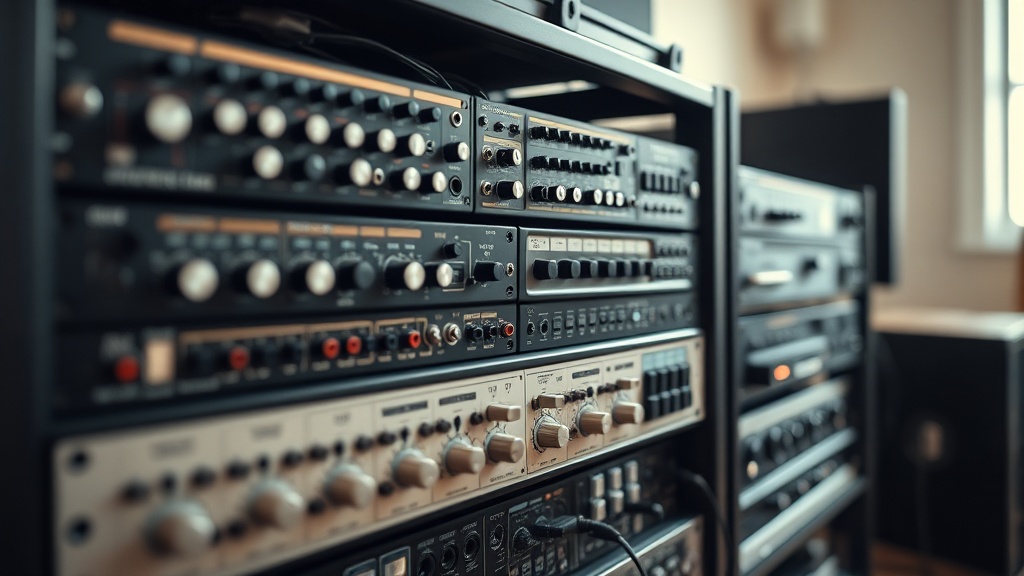
The Legacy of the Neve 1073 Preamp and EQ
The tonal impact of using the same channel strip plugin on every track versus mixing and matching different emulations depends on the specific sonic goals of the mix. A uniform approach creates a cohesive tonal character similar to working on a real console, where every channel passes through identical electronics. A varied approach allows each track to benefit from the console character best suited to its tonal requirements. Both strategies produce excellent results when applied with intention and understanding.
API console emulations bring a distinctly American sonic signature characterized by forward midrange energy and tight transient response. The proportional Q design of API equalizers automatically narrows the bandwidth as you apply more boost, preventing the broad frequency smearing that can occur with other EQ topologies. This self-correcting behavior makes API-style channel strips particularly forgiving and musical to work with, even for less experienced engineers.
Top Neve 1073 Channel Strip Plugin Emulations
Gain staging between the EQ and compressor sections within a channel strip plugin affects the character and amount of compression applied. Boosting frequencies in the EQ before the compressor increases the signal level at those frequencies, potentially causing the compressor to react more aggressively to that frequency content. Cutting frequencies before the compressor has the opposite effect, making the compressor less sensitive to those frequencies. Understanding this interaction allows you to use EQ placement as a creative tool for shaping the compressor's behavior.
Neve 88RS Console Channel Strip Plugins Reviewed
API channel strip plugins deliver a distinctive punchy, aggressive character that has defined the sound of American rock music for decades. The API 500 series modules are renowned for their proportional Q equalizers and discrete circuit design. Channel strip plugins emulating API hardware excel on drums, electric guitars, and bass, where their forward midrange presence cuts through dense mixes. Producers mixing rock, punk, or metal should seriously consider an API-style channel strip.
- channel strip plugins
How Neve Plugins Add Harmonic Warmth to Recordings
The concept of drive or input gain in a channel strip plugin simulates pushing the signal harder into the analog circuitry of the modeled hardware. Increasing drive generates more harmonic distortion and saturation, adding warmth and character at the cost of some transparency. Each channel strip plugin responds differently to being driven, with some breaking up gracefully and others becoming harsh at extreme settings. Finding the sweet spot for drive on each source is a key skill in getting the best from your channel strip.
The relationship between monitoring volume and perceived channel strip saturation affects how engineers calibrate their processing. At lower monitoring volumes, the Fletcher-Munson effect reduces the perceived bass and treble, making midrange-heavy saturation more apparent. At higher monitoring volumes, the full frequency spectrum is perceived more evenly, and saturation becomes less noticeable. Professional engineers check their channel strip saturation settings at multiple monitoring volumes to ensure the processing sounds appropriate across different playback levels.
SoundShockAudio has observed that producers who combine a handful of channel strip plugins with a few specialty processors achieve the best results in the most efficient workflow. The channel strips handle the heavy lifting of EQ, compression, and saturation on every track, while specialty plugins like de-essers, stereo imagers, and multiband compressors address specific problems on individual tracks. This balanced approach avoids both the limitations of using only channel strips and the complexity of assembling unique plugin chains on every track.
Best Uses for Neve Channel Strip Plugins in a Mix
FL Studio's mixer architecture makes it straightforward to load channel strip plugins on individual tracks with full send and return routing capability. The plugin delay compensation system ensures that even latency-heavy channel strip plugins remain sample-accurate in the mix. FL Studio users should set their mixer tracks to route to a master bus through group buses, establishing a hierarchical gain staging structure that mimics a physical console. This organization makes it easy to apply group-level channel strip processing to drums, vocals, and instruments.
The art of mixing requires understanding not just individual processing techniques but how those techniques interact when applied across an entire session of tracks. An EQ boost on one track affects the perceived frequency balance of every other track. Compression on a drum bus changes the dynamic relationship between drums and other instruments. Every processing decision exists in the context of the full mix, and the most effective engineers think globally even when working on individual tracks.
Home studio producers can achieve professional-quality mixes by focusing on fundamental techniques rather than expensive equipment. Proper gain staging, systematic EQ approaches, appropriate compression settings, and careful level balancing produce results that rival commercial studios. The democratization of recording technology means that the knowledge gap, not the equipment gap, is the primary barrier to professional results. Investing time in learning mixing fundamentals yields greater returns than any hardware or software purchase.
Neve vs SSL Channel Strip Plugins for Different Genres
Mid-side processing in certain channel strip plugins allows you to independently EQ and compress the center and side information of a stereo signal. This advanced technique is valuable for mastering and stereo bus processing, where you might want to tighten the bass in the center while adding air to the sides. Channel strip plugins from Brainworx are particularly known for their mid-side capabilities. This feature transforms a standard channel strip into a powerful stereo imaging tool.
The concept of serial versus parallel compression within channel strip plugins offers different approaches to dynamics management. Serial compression uses a single compressor acting on the full signal, where all gain reduction happens in one stage. Parallel compression blends the compressed signal with the uncompressed original, preserving dynamics while adding density. Many channel strip plugins now include a mix knob that enables parallel compression within the plugin itself, eliminating the need for complex routing in the DAW.
The concept of vintage component drift, where electronic components change their electrical values over decades of use, is modeled in some premium channel strip plugins. This drift means that a fifty-year-old Neve 1073 sounds subtly different from a brand-new one due to changes in capacitor values, resistor tolerances, and transformer core characteristics. Plugin developers who model this aging behavior create emulations that capture the specific sonic character of well-worn vintage equipment. This attention to detail produces channel strip sounds that are impossible to achieve with generic analog models.
Configuring Neve Channel Strip Plugins for Maximum Warmth
The ergonomics of channel strip plugin interfaces directly impact the speed and quality of mixing decisions. Well-designed interfaces place the most frequently adjusted controls in easily accessible positions and use visual feedback that communicates processing status at a glance. Poor interface design forces engineers to search for controls, read tiny labels, and interpret ambiguous displays, slowing the mixing process. The best channel strip plugins balance comprehensive feature sets with intuitive, uncluttered interfaces.
SoundShockAudio's collection of channel strip plugin resources represents one of the most comprehensive information sources available for producers seeking to improve their mixing through console emulation technology. The combination of reviews, tutorials, comparisons, community content, and educational tools provides everything a producer needs to select, learn, and master channel strip plugins for professional results. The site continues to grow and evolve alongside the rapidly advancing field of analog modeling technology.